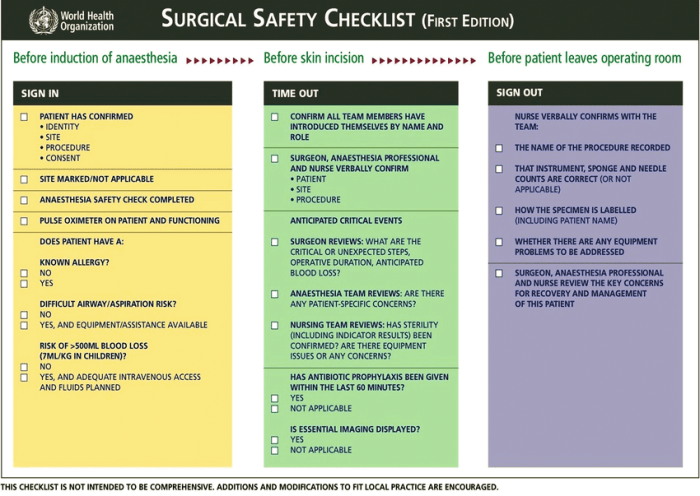
Patient Safety Checklist sets the stage for this enthralling narrative, offering readers a glimpse into a story that is rich in detail with casual formal language style and brimming with originality from the outset.
Patient safety is a critical aspect of healthcare, and the use of checklists plays a vital role in ensuring the well-being of patients. This article explores the significance of patient safety checklists and their impact on medical practice.
Patient Safety
Patient safety in healthcare refers to the measures and protocols put in place to prevent harm or injury to patients during medical treatment. It involves ensuring that patients are protected from errors, accidents, infections, and other adverse events that may occur in healthcare settings.Patient safety is of utmost importance in medical practice as it directly impacts the well-being and outcomes of patients.
By prioritizing patient safety, healthcare providers can reduce the risk of medical errors, improve the quality of care, and enhance patient satisfaction. Ultimately, focusing on patient safety leads to better health outcomes and overall healthcare system performance.
Common Patient Safety Issues
- Medication Errors: Mistakes in prescribing, dispensing, or administering medications can lead to adverse drug reactions or other harmful effects on patients.
- Healthcare-Associated Infections: Infections acquired during hospital stays due to inadequate infection control measures pose a significant risk to patient safety.
- Communication Breakdowns: Poor communication among healthcare providers, patients, and caregivers can result in misunderstandings, delays in treatment, and errors in care delivery.
- Surgical Errors: Errors during surgical procedures, such as wrong-site surgery or complications from anesthesia, can have serious consequences for patients.
- Falls: Patient falls in healthcare facilities, often due to environmental hazards or lack of supervision, can result in injuries and complications.
Patient Safety Checklist
A patient safety checklist is a tool used in healthcare settings to ensure that all necessary safety measures are taken to protect patients from harm during their treatment and care. It is a list of items or steps that healthcare providers must follow to minimize the risk of medical errors and improve patient outcomes.Patient safety checklists serve the purpose of standardizing procedures, promoting communication among healthcare team members, and reducing the likelihood of mistakes or oversights.
By systematically going through each item on the checklist, healthcare professionals can ensure that no important safety measures are overlooked, leading to better quality of care and increased patient safety.
Benefits of Using a Patient Safety Checklist
- Improves patient outcomes by reducing the risk of medical errors and adverse events.
- Enhances communication and teamwork among healthcare providers.
- Standardizes procedures to ensure consistency in care delivery.
- Increases efficiency by streamlining processes and reducing unnecessary steps.
How Patient Safety Checklists Help Reduce Medical Errors
- Identifying and addressing potential risks before they escalate into patient harm.
- Encouraging thorough documentation and verification of critical information.
- Prompting healthcare providers to double-check medications, dosages, and procedures.
- Facilitating timely responses to emergencies or unexpected complications.
Components of a Patient Safety Checklist

A patient safety checklist typically includes essential components that are crucial for ensuring the well-being of patients during their medical care. Each component plays a significant role in minimizing errors and improving overall patient safety.
1. Identification Verification
- Ensure patient’s name, date of birth, and medical record number are correctly matched with their identification band.
- Significance: Prevents medication errors, procedures on the wrong patient, or other misidentifications that can lead to serious harm.
- Example: “Verify patient’s identity before administering any medication or performing a procedure.”
2. Medication Reconciliation
- Review and reconcile all medications a patient is taking to prevent drug interactions and adverse effects.
- Significance: Reduces the risk of medication errors and ensures safe transitions in care.
- Example: “Verify patient’s current medication list with the prescribed medications.”
3. Infection Control Measures
- Implement protocols for hand hygiene, use of personal protective equipment, and proper sterilization techniques.
- Significance: Prevents healthcare-associated infections and promotes a safe environment for both patients and healthcare providers.
- Example: “Ensure all staff members follow hand hygiene guidelines before and after patient contact.”
4. Fall Prevention Strategies
- Assess patient’s risk of falls and implement measures such as bed alarms or assistance with walking.
- Significance: Reduces the risk of falls and related injuries, especially in vulnerable patient populations.
- Example: “Place a sign above the patient’s bed indicating fall risk and necessary precautions.”
Implementation of Patient Safety Checklists
Implementing patient safety checklists in healthcare facilities is crucial for ensuring the well-being of patients. Below are some best practices for successfully integrating patient safety checklists into daily routines and how it can lead to improved patient outcomes.
Best Practices for Implementing Patient Safety Checklists
- Ensure that all healthcare professionals are trained on how to properly use the patient safety checklist.
- Integrate the checklist into existing workflow processes to streamline its use and make it a seamless part of daily routines.
- Regularly review and update the checklist to reflect any changes in protocols or best practices.
- Encourage open communication among team members to address any concerns or feedback regarding the checklist.
Integration of Patient Safety Checklists into Daily Routines
- Start each shift by reviewing the patient safety checklist to ensure all necessary steps are taken for each patient.
- Incorporate the checklist into team huddles or briefings to ensure that everyone is on the same page regarding patient safety measures.
- Use electronic health record systems to automate the checklist process and provide reminders for healthcare professionals.
Success Stories and Case Studies
One hospital reported a significant decrease in medication errors after implementing a patient safety checklist that required double-checking of medications before administration.
In another case, a surgical team credits the use of a comprehensive checklist for reducing surgical site infections and improving overall patient outcomes.
In conclusion, Patient Safety Checklists are indispensable tools that enhance the quality of healthcare delivery by promoting error reduction and improving patient outcomes. By integrating these checklists into daily routines, healthcare professionals can further prioritize patient safety and well-being.
User Queries
What is the purpose of a patient safety checklist?
A patient safety checklist is designed to ensure that healthcare providers follow specific steps to prevent errors and promote patient well-being during medical procedures.
How do patient safety checklists help reduce medical errors?
Patient safety checklists help reduce medical errors by standardizing procedures, improving communication among healthcare teams, and enhancing overall patient care quality.
What are some common items found on patient safety checklists?
Common items on patient safety checklists include verifying patient identity, confirming correct procedures, ensuring proper medication administration, and maintaining infection control protocols.


